
The Privana Enclave is 41 plots
Everyone knows Privana as sold-out luxury towers. The RERA file for its newest phase records a plotted colony. Here is the gap, read from the file.
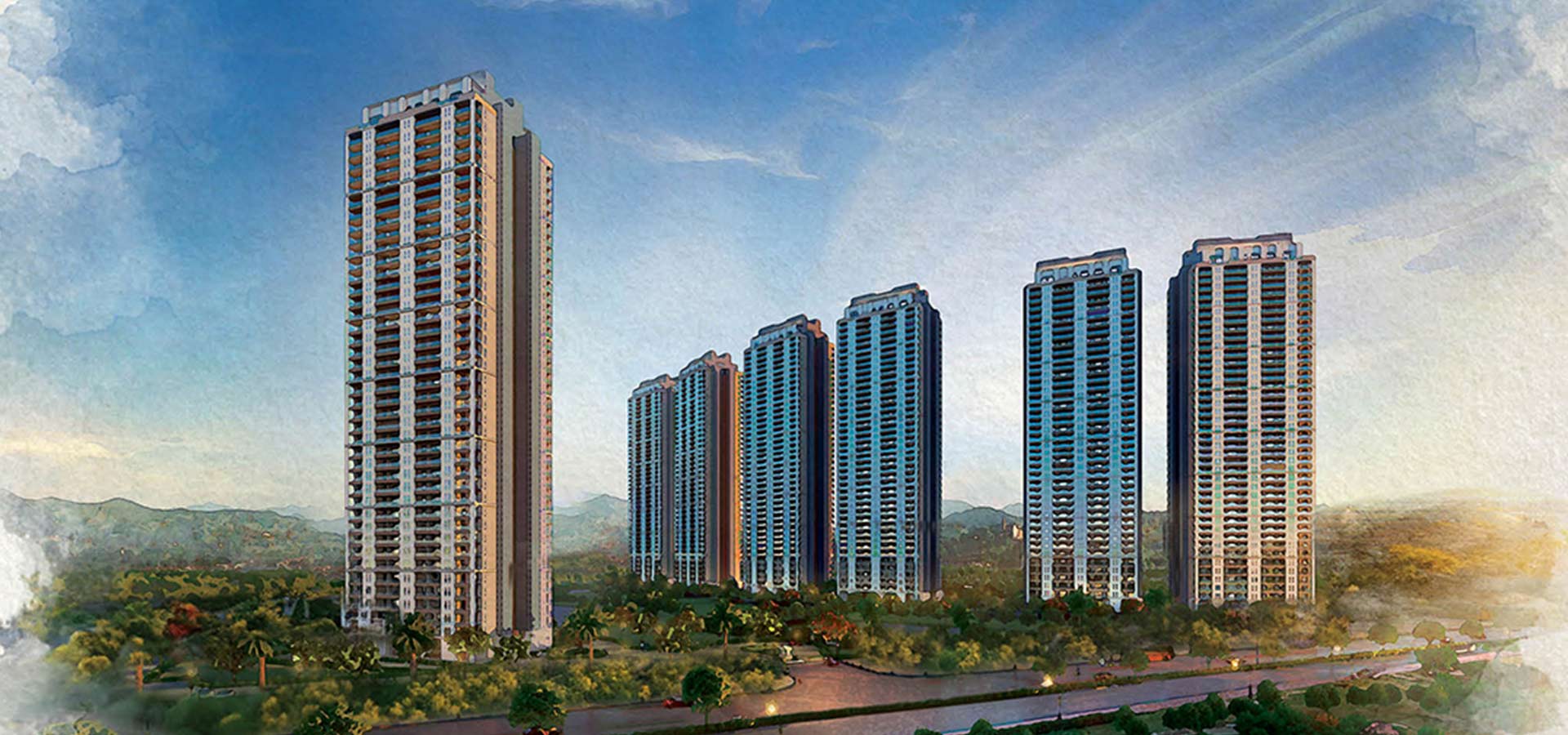
If you have looked at property in Gurgaon this year, you know the name Privana. It is DLF's flagship luxury township on the Southern Peripheral Road, the successor to The Camellias, the address where a single tower phase reportedly sold out in a week. So when a new registration titled "Privana Enclave" appeared on the HARERA Gurugram list on 23 July 2026, it was easy to read it as one more tranche of those towers. It is not. We pulled the actual RERA file, and the file records something quite different: a plotted colony of forty-one plots. This note reads that file line by line, because the gap between what the name carries and what the document says is exactly the gap a buyer pays for.
Phase VII
Sectors 76 & 77
in the form
What "Privana" is, and where the Enclave sits inside it
DLF Privana is one licensed colony: 116.29625 acres in Sectors 76 and 77, held under DTCP licence 219 of 2023 dated 25 October 2023, valid to 24 October 2028, developed under the state's NILP (New Integrated Licence Policy) route. That single colony is being built out in ten numbered phases. Most of them are apartment phases. The three that have already reached the market are the towers everyone means when they say Privana.
The registration certificate for Privana Enclave is RC/REP/HARERA/GGM/1079/811/2026/51, dated 23 July 2026, RERA number RERA-GRG-2236-2026. On the approved master layout, which we opened and read at the drawing's own scale, this is Phase VII: a 4.662-acre pocket, and the only plotted phase in the whole colony. The phase table on that drawing puts the contrast in DLF's own hand. Read across a single row and the Enclave is the outlier.
How the form tells you it is plots, not apartments
You do not need the layout drawing to know this is a plotted scheme. The Form REP-I fields say it plainly, and they are the fields a buyer should learn to read first. Under project cost, the "estimated cost of construction of apartments" is entered as zero. Under the type of construction, the form records zero apartments, zero towers, zero carpet area. Under land use, the area "to be used for construction of apartments" is zero, while "plots to be sold" is 10,932.80 square metres, roads take 6,031.6, and parks and playgrounds 1,902. What is left is a subdivision: land cut into plots, wrapped in roads and a green, with the buildings to be raised later by whoever buys each plot.
The schedule of plots is the substance of the scheme. Forty-one plots, ranging from about 204 to 426 square metres, which is roughly 244 to 510 square yards. Two size bands dominate: fourteen plots of 204 square metres and fourteen of 286 square metres, with six at 299 and a small number of larger and odd-sized plots. This is a boutique, low-density pocket, not a tower.
DLF is the collaborator here, not the owner
The next thing the file corrects is a natural assumption: that DLF Limited owns this land. It does not, in the ordinary sense. In Part B the form answers "No" to whether the applicant is the owner-licensee, and records that DLF is applying as a collaborator. The licence lists thirteen licensees: DLF Limited alongside eleven associated companies (Milda Buildwell, High Vista Buildcon, which the file notes was earlier Vikram Electric Equipment, Nadish, Naja, Invecon, Jayanti, Ananti, Uni International, Qabil, Raeks and Karida) and one individual landowner from Village Wazirabad. Ownership changed after the licence was granted, and the file carries the paper for it, including a sale-cum-power document dated 28 June 2023 transferring about 6.97 acres from the Vikram entity to DLF, a merger order, and a change-of-name certificate.
None of this is unusual for a large Gurgaon land assembly, and it is not a red flag. It is simply the reality behind the single brand name: a colony stitched together from many licence-holders, with DLF as the developing collaborator that markets and delivers. A buyer should know it because the entity you contract with, and the escrow you pay into, sit on top of this structure rather than on a simple freehold title.
The umbrella name carries sold-out towers. The file underneath it records forty-one plots, thirteen licensees, and a power line across three of them.
Three plots are on hold under a power line
Registration here was granted with conditions, which is where the file earns its keep. The hearing record shows a first hearing on 22 June 2026, an adjournment on 30 June, and approval thereafter, with the certificate issued on 23 July 2026. Two conditions matter to a buyer directly.
First, a 220 kV high-tension line crosses the site. The authority directed that three plots, numbered SR/05 to SR/07, be kept on hold until that line is re-aligned as per the approved layout, and ordered that condition written into the registration certificate itself. It is also marked on the approved drawing. If you are shown one of those three plots, you are being shown land that cannot be delivered until a power line moves. That is the kind of thing a site visit will not tell you and the file will.
Second, the registration was issued against a bank guarantee or demand draft of 25 lakh rupees, held against submission of the approved service plan and estimates within a set time, with road-access permission and a powerline-shifting clearance to follow. The road access has since been granted: a GMDA memo dated 16 July 2026 approves connecting the enclave's 24-metre internal road to the 60-metre Sector 76 outer master road, subject to DLF bearing the cost and to the connection being removable at DLF's own expense if the master road is later upgraded.
There is one more layer that rewards attention. The file carries an Aravalli NOC, a forest NOC, and an undertaking covering the natural conservation zone, tree cutting, the HT line and forest-land diversion. Land on this stretch of the Southern Peripheral Road sits close to environmentally regulated ground, and these clearances are part of why. They are not a reason to walk away; they are a reason to read the conditions attached to each before you sign.
A small budget, a long clock, a strong balance sheet
The money in the file is modest by DLF standards, because the developer is building infrastructure and selling land, not raising towers. The sworn project cost is 56.63 crore rupees: land at 27.44 crore, apartment construction at zero, internal infrastructure at 18.65 crore, and other costs including EDC and taxes at 10.54 crore. As on the application, nothing had been spent yet, and there is no bank loan against the project. Deposits from plot buyers are to be credited to a single ICICI Bank collection account at the Qutub Plaza branch in DLF Phase 1. DLF's own net worth, certified as on 31 December 2025, is 29,268 crore rupees, so the promoter's capacity is not in question.
The clock is the surprise. Construction was to start on 1 July 2026, and the filed completion date is 30 April 2033. The construction schedule in the file spreads infrastructure works from 2027 all the way to 2033. That is a long horizon for forty-one plots, and it is the date that binds under RERA, not any shorter timeline a channel partner may quote. A plot buyer expecting quick registration of a fully serviced plot should weigh the filed date, and read the payment terms against it.
Those payment terms are the one thing the public file does not give up. As with most Gurgaon registrations, the draft allotment letter and agreement sit in the promoter's folder rather than on the public page, so the schedule of instalments is not visible here. This matters under Section 13 of the RERA Act, which bars a promoter from taking more than ten per cent of the cost as an advance before a written, registered agreement for sale. For a plot, insist on seeing the agreement and the instalment plan in writing, and treat any request for a larger pre-agreement payment as a stop sign.
The same file, in fifteen minutes
None of what is above needed a broker or an inside line. It is a public file, and the method is repeatable for any Gurgaon launch you are weighing.
What the name implies against what the file records
The point of this note is not that Privana Enclave is a bad buy. It may suit a buyer who specifically wants a serviced plot inside a DLF-developed colony, and it carries a promoter with real depth and a clean track record on its recent projects. The point is that the product is not what the brand halo suggests, and the difference is entirely knowable before you pay a rupee.
What the name carries
- The Privana luxury tower brand
- Ready or near-ready apartments
- Marketed as a collection of residences
- The momentum of a sold-out phase
What the file records
- 41 plots, no towers, apartment cost zero
- Filed completion 30 April 2033
- Three plots on hold under a 220 kV line
- Conditional registration, collaborator structure
If you are evaluating a purchase in these markets, Akhut Estates advises buyers directly, and reads the file before the brochure: akhut.in/contact.
A brand can sell out in a week. A file takes fifteen minutes, and it is the one that tells you what you are actually buying.